The Fat Flip: Uncovering Fat Storage Space Secrets However, researchers currently identify that it's likewise an active body organ in your endocrine system. Fat contains afferent neuron and blood vessels and communicates via hormonal agent signals with various other organs throughout your body. In summary, fat is an important macronutrient that should be essential in every endurance professional athlete's diet regimen. Fat is valuable for lower-intensity training, and making certain complete calorie intake remains in line with the demands of the training program. Most importantly, your training timetable and racing goals need to drive your nutrition, not the other way around. To cope with excess energy, the body can develop new fat cells via a process called hyperplasia. Now, researchers in the Sloan Kettering Institute lab of Frederic Geissmann have actually made an important discovery concerning this power policy process. In computer mice, they identified a molecular protein called PDGF-CC that signifies the adipocytes to absorb extra fat.
Plan For Your Weight-loss Journey
A system that stopped working to replace calories burned to keep you cozy would certainly have been dangerous. It is one reason weight-loss is challenging to sustain and why boosting power expenditure alone might not suffice to reduce weight. In a comparable style, Acetyl-CoA formed from the breakdown of fats throughout beta-oxidation likewise enters the Kreb's cycle and Electron Transportation Chain. These phases then generate ATP, which can be used to power numerous cell processes, including contraction. Before fatty acids can be made use of for energy, nevertheless, they need to initially get in mitochondria. To enable this, fats are very first exchanged a molecule called fatty acyl-CoA.Exactly how to trick your body into burning kept fat?
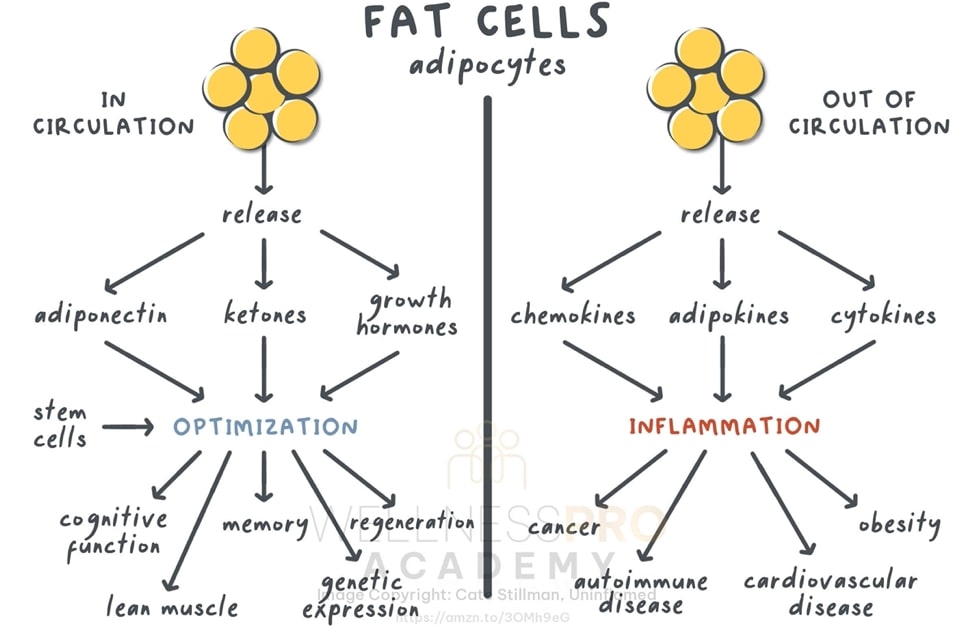
How Should I Care For My Fat?
This is due to the fact that fat is much more plentiful than kept carbs in the liver and muscle tissue (glycogen), and the human body has progressed to make use of fat when possible. Basically, the body is trying to preserve glycogen for when you really need it. For our human forefathers, cool environments suggested survival required a lot more gas. One course of enzyme responsible for this response is called ACSL (lengthy chain fatty acyl-CoA ligase/ synthetase). Furthermore, both plant and animal cells save energy by shunting sugar right into fat synthesis pathways. One gram of fat includes virtually six times the energy of the same quantity of glycogen, but the power from fat is less Electronic pelvic toners easily available than that from glycogen. Still, each storage space device is very important because cells require both fast and lasting energy depots. Fats are kept in beads in the cytoplasm; adipose cells are specialized for this sort of storage due to the fact that they contain unusually large fat beads. Humans generally save enough fat to supply their cells with several weeks' well worth of power (Number 7). Instead, it begins accumulating in body organs that are created to store fat, a procedure called ectopic fat deposition. If the very same device applies in people, maybe crucial to developing methods to assist people get or lose weight as required. Medications that target PDGF-CC-- or its human equivalent-- can influence just how much fat is saved or melted. When we talk about fat in regards to energy, we are generally discussing a details type of fat molecule called triglycerides.- Your fat metabolic process (beta oxidation) attribute analyzes just how effectively your muscle cells can make use of fatty acids as a source of gas.Even refined useless cycles-- procedures in which particles are consistently built and broken down-- take in power and generate warm.Professional athletes that "carbo-load" by eating pasta the evening prior to a competition are trying to enhance their glycogen reserves.It is less complicated to keep your set point weight since your body wishes to stay at that point-- not drop weight.
Unlock Your Health & Physical Fitness Dna
When they end up being swollen or inefficient, they contribute to insulin resistance, fatty liver condition and cardiovascular danger. Obesity emerges from both the development of white adipose cells and a rise in their number. Whenever we consume a meal consisting of fats (triglycerides), our pancreatic produces enzymes, called lipases, right into our tiny intestine. These enzymes break down triglycerides in our food right into fatty acids and glycerol, which then cross the intestinal membrane and enter digestive cells called enterocytes. Saved fat is broken down into fats and glycerol during durations of calorie shortage (e.g., fasting, exercise). This process, called lipolysis, supplies energy when food intake is insufficient. By secreting some hormones and responding to others, fat connects with other organs throughout your body, along with with your main nervous system. It manages energy supply and need through hunger and satiety (feeling full) signals. It responds to insulin by converting excess blood glucose to lipids and saving them away check here for future usage. Adipose tissue also has its very own active immune cells, which react to certain stimuli by removing dead fat cells or producing an inflammatory reaction. The ability of your body to save muscular tissue and liver glycogen, nonetheless, is restricted to roughly 1,800 to 2,000 calories worth of power, or sufficient fuel for 90 to 120 minutes of continual, energetic task. Lipolysis proceeds in an organized and regulated way, with various enzymes acting at each action. Catecholamines are the key activators of lipolysis, while various other hormonal agents and dietary compounds additionally influence it. Each of these compounds binds and work with their particular membrane-bound receptors to generate a signaling waterfall with the single purpose of turning on HSL. ATGL carries out the primary step of TAG hydrolysis (hence, it is rate-limiting), producing diacylglycerols and FFAs. Foods that you eat or drink throughout exercise that supply carb can help delay the deficiency of muscular tissue glycogen and avoid hypoglycemia. Beta oxidation is the degradation of fats by eliminating 2 carbons at a time. It is the primary pathway for assimilation of fats and takes place in the mitochondrial matrix of tissues such as the liver, muscular tissue, and adipose. Two-carbon fragments are successively removed from the carboxyl end of the fatty acyl-CoA, producing NADH, FADH, and Acetyl CoA, which is utilized in the TCA cycle to make ATP. Fatty acids with strange numbers of carbon ultimately yield one mole of propionyl-CoA, which is converted to succinyl CoA so that it is useful in the TCA cycle. 